Guide
Roof Painting NZ: Cost, Process & Choosing a Painter
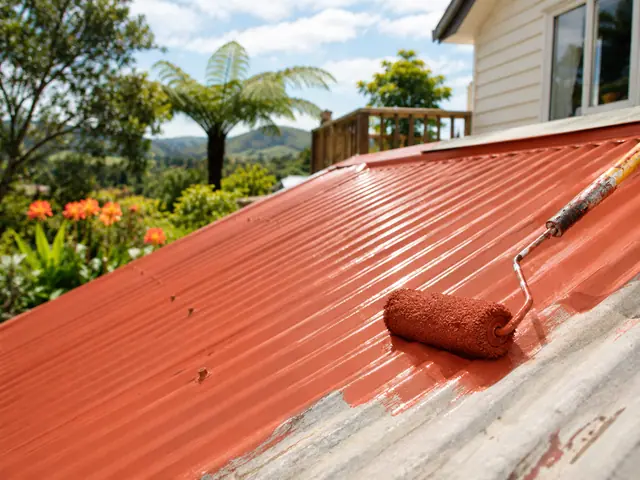
Roof painting prices depend on roof size, pitch, condition and access, so we don't publish a single figure. This guide explains the process, when the Building Act exemption for maintenance applies, the safety rules that affect the price, and what to ask before you book.
What a roof repaint involves
A typical roof repaint has these stages:
- Inspection, to spot rust, loose fixings, damaged flashings and earlier coatings.
- Cleaning, often with a water blaster, and treatment for moss or lichen.
- Repairs, such as replacing fixings, spot-priming rust and sealing.
- Priming, where bare or rusted metal needs it.
- Top coats, applied to the paint manufacturer’s specification.
Most of the cost is in preparation and safe access. The paint itself is usually a smaller share. If a quote is much cheaper than the others, ask what preparation and safety measures it leaves out.
Painting or replacing?
Repainting is maintenance. Under Schedule 1 of the Building Act 2004, repairs and maintenance that use comparable materials are generally exempt from needing a building consent.
The exemption does not cover two kinds of work:
- repair or replacement of something that has failed the Building Code’s durability requirements, for example a roof that is leaking;
- complete or substantial replacement of anything that contributes to the building’s structure or fire safety.
MBIE’s guidance gives one example of exempt work: replacing 20-year-old profiled metal roof cladding that has met its Building Code durability requirement (lasted more than 15 years) with comparable profiled metal roofing. If paint can no longer save the roof, talk to a roofer and check consent requirements with your council.
Safety rules that affect the price
Working at height. WorkSafe notes that a fall from height is likely to cause serious injury. It publishes guidance on working safely on roofs, including controls to prevent falls, scaffolding, safety nets and other equipment. Safe access is a legitimate cost, so ask how the painter will prevent falls on your roof.
Lead-based paint. WorkSafe advises presuming that buildings built in the 1980s or earlier have lead-based paint. Health New Zealand advises:
- don’t use abrasive blasting on properties built or painted before 1970;
- when water blasting, clean up paint flakes and stop them spreading to other properties;
- never burn paint debris.
If you collect drinking water from your roof, tell the painter before any work starts. Ask how they will protect your tank and which coatings they will use.
Comparing quotes
- Ask for written quotes, not estimates, that list preparation, repairs, primer, the number of top coats, the product, access equipment and clean-up.
- The Commerce Commission warns about being misled on products. It warned a roofing company whose quotes said the product being installed was ‘Colorsteel’ when it was in fact another brand. Make sure the paint brand and system are named in the quote.
- Ask what guarantee is offered and what it requires from you, such as washing the roof regularly.
- For residential building work, there’s a 12-month defect repair period from completion. Notify defects in writing within that period, and the contractor must put them right within a reasonable time.
Sources
All links were opened and checked on 2026-10-26. Rules, fees and prices change, so check the source before you rely on it.
- 1.1 General repair, maintenance, and replacement, Building Performance (MBIE)
- Working at height, WorkSafe New Zealand
- Managing lead-based paint, WorkSafe New Zealand
- Lead-based paint, Health New Zealand | Te Whatu Ora
- Quotes and estimates, Consumer Protection (MBIE)
- Construction and property, Commerce Commission
- Once building work finishes, Building Performance (MBIE)
General information only. This guide summarises public guidance from New Zealand agencies. It isn't legal advice. For a dispute, contact Consumer Protection, Citizens Advice Bureau or a lawyer.